The Göttingen Campus

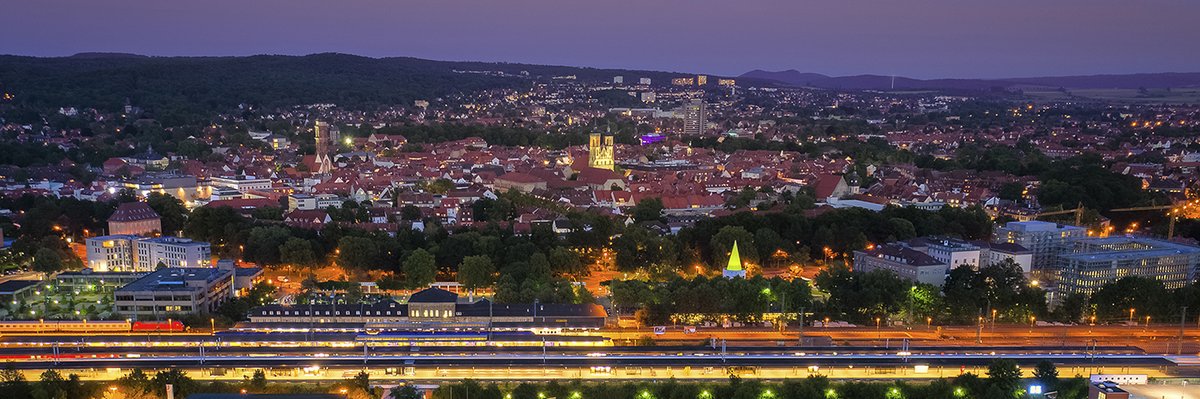
The Göttingen location has come to be synonymous with high-quality international research. To ensure that this remains the case in the future, the University of Göttingen, including the University Medical Center, and seven non-university local research centres have joined forces to form the Göttingen Campus.
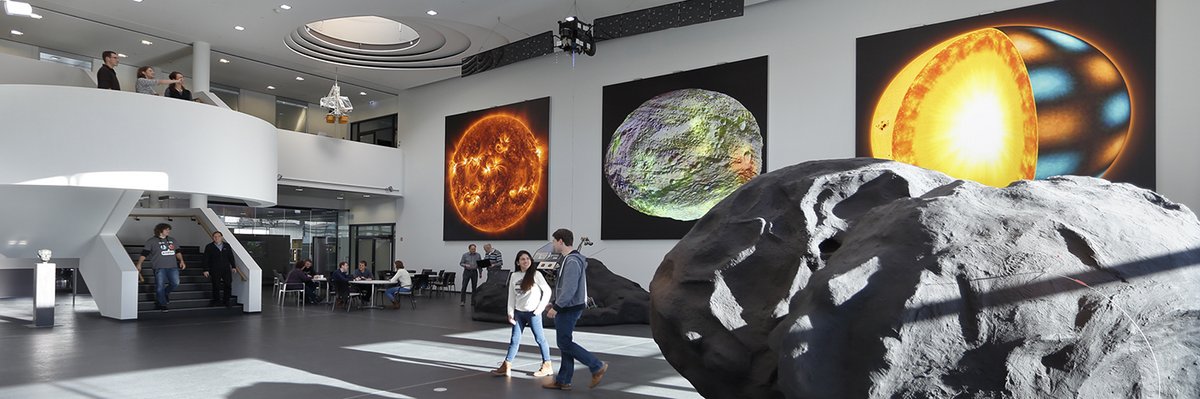
By drawing on their joint strengths and potential, campus partners have created a unique and stimulating environment that encourages diversity and an active exchange between professors, researchers and doctoral students.
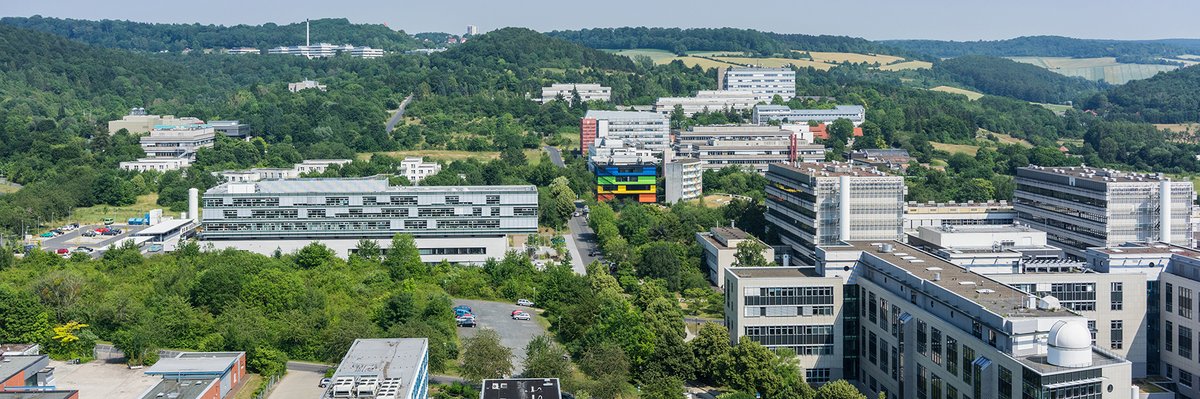
Across the Göttingen Campus, there are currently more than 5,900 researchers working in nearly every scientific discipline.
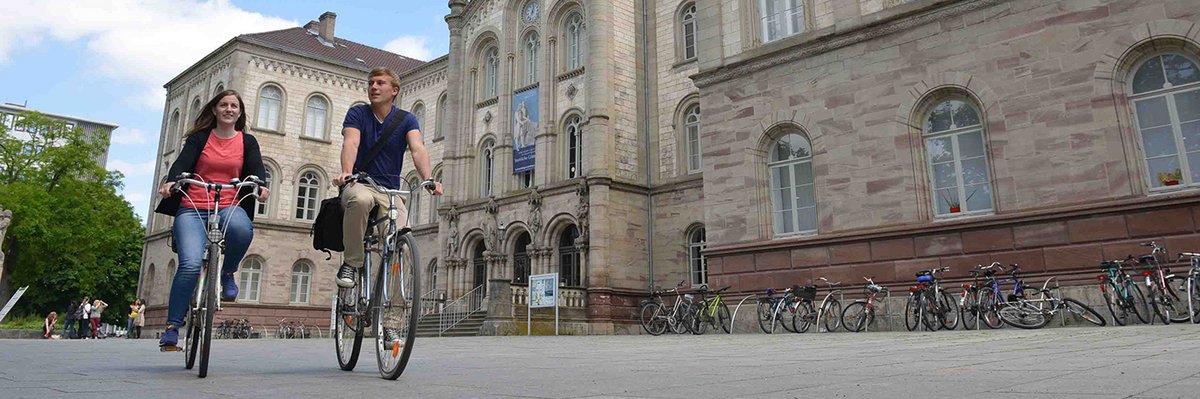
Within the Göttingen Campus, the quality of teaching and training of early career scientists is assured and continuously improved by joint graduate programmes and inter-institute junior research groups.
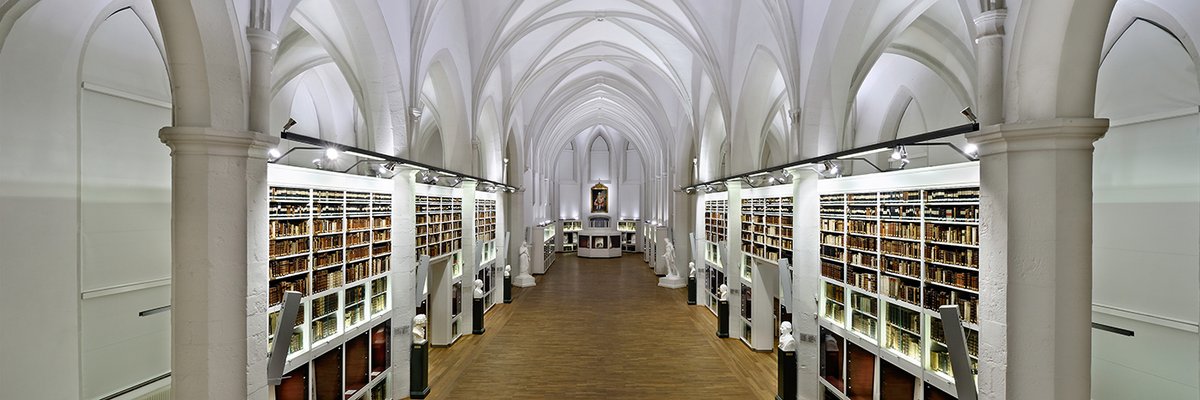
Science on campus benefits from excellent joint third-party funded projects and 23 joint professorships between the University and non-university institutions.

Latest news

  • Fundamental principles that shape pandemics
    Every pandemic is different. Nevertheless, certain commonalities can be identified across all pandemics. Researchers at the Max Planck Institute for Dynamics and Self-Organization (MPI-DS), together with an interdisciplinary team of experts, have compiled ten fundamental mechanisms that can be used to describe the development of pandemics. The study brings together insights from epidemiology, sociology, mathematics, physics, political science,…
  • Only the world’s largest solar telescope and complex computer simulations were able to make the vortices visible. They are changing our understanding of the Sun.
    Researchers from the U.S. National Science Foundation National Solar Observatory (NSF NSO), the Max Planck Institute for Solar System Research (MPS) in Germany, and the High Altitude Observatory (HAO) in the USA have made a groundbreaking discovery in the field of solar physics. New images of the Sun’s surface taken with the world’s largest solar telescope, the NSF Daniel K. Inouye Solar Telescope, built and operated by the NSO in Hawaii, along…
  • Physicists at Göttingen University image three-dimensional wavefunctions with table-top, soft-X-ray laser
    One of the most famous and intriguing results of quantum mechanics is the finding that fundamental particles, such as electrons, cannot be pinned down to one single location. Instead, a particle is described by its “wavefunction”, which allows researchers to derive probability distributions – a sort of mathematical map that shows the possibilities – of fundamental properties such as its position and momentum. In particular, the electron…
  • Research in Göttingen provide evidence of possible cross-protection through an already licensed Zaire ebolavirus vaccine.
    Ebolaviruses are among the most dangerous known human pathogens. Three ebolavirus species have repeatedly caused major disease outbreaks on the African continent. Most outbreaks have been caused by Zaire ebolavirus. Vaccines and therapeutics are available for this virus species. In contrast, no therapeutics or vaccines are currently available against Bundibugyo ebolavirus, which is responsible for the ongoing outbreak in the Democratic Republic…
  • Constantin Pape heads a new bridge research group at the Max Planck Institute for Multidisciplinary Sciences (MPI-NAT).
    Constantin Pape has been conducting research as a junior professor at the University of Göttingen since 2022, focusing on image processing methods in biology and medicine. He analyzes cells, tissues, organs, and entire organisms with the help of artificial intelligence (AI), using fluorescence and electron microscopy. With his new group at the MPI-NAT, Pape will expand his work to the molecular level and build a bridge between the University of…